Research
Good choices start with solid knowledge.
Here you can read about the research behind the messages in our guides and find the sources we rely on.
Do you have questions about the content or sources? Write to Us.
Do you also want to make a difference for the animals?
Join the community in Dyrenes Alliance.
A choice that can make a difference
Choose food without animal products
When you eat vegan, you reject meat, fish, eggs, and dairy. It's a concrete way to show respect for animals daily.
Smaller footprint. More space.
Major studies indicate that vegan diets often have a lower climate impact and require far less land than diets heavy in meat.
Eat plant-based and diverse
A well-planned vegan diet can be a healthy choice for adults. Legumes, whole grains, vegetables, nuts, and proper supplements make a solid foundation.
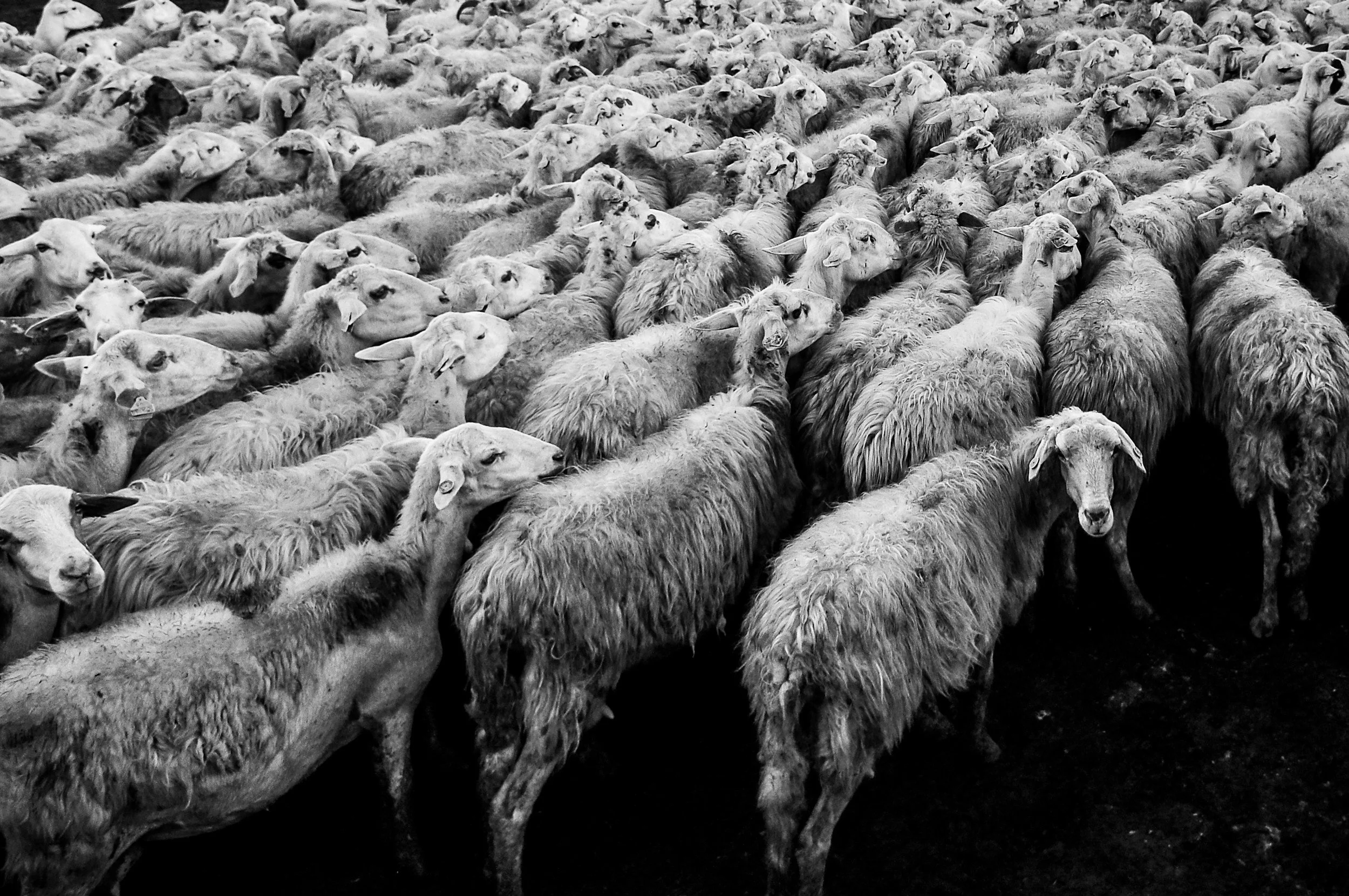
For the animals: They have needs. You have a choice.
Animals have needs that are often unmet in food production. The EU’s food safety authority, EFSA, highlights issues like mobility problems in broiler chickens, stress from limited contact between cows and calves, and severe welfare issues with CO₂ stunning of pigs.
With vegan food, you eat without demanding products from these animals. For us, that’s a strong reason to choose plant-based.
Eggs and milk involve animal rights too
Animal rights concern the entire life of an animal: the chance to move freely, have contact with others, express natural behaviors, and conditions during transport and slaughter.
Fish deserve consideration too
Research on fish capacity to feel pain, fear, and stress shows their welfare must be taken seriously. Production conditions and knowledge vary by species.
For the planet: More plants. Smaller footprint.
What we eat impacts the climate and space available for nature. Research consistently shows plant-based diets tend to have a lower climate impact and use less land than meat-heavy diets.
No food is impact-free. Where and how food is produced matters too. [2.1] [3.1] [4.1]
About 75% lower climate impact in a UK study
Scarborough and colleagues compared diet data from 55,504 people in the UK with food’s environmental impacts.
Compared to those eating at least 100 grams of meat daily, vegan’s diets showed on average:
- About 75% lower climate impact.
- About 75% less land use.
- About 54% less water use, though with more uncertainty. [1.2] [1.3]
These numbers reflect estimated differences between diet groups. They’re not guarantees for individuals and cover only diet-related footprints, not total personal climate impact.
Global potential
Poore and Nemecek analyzed the global impact if animal foods were replaced with plant-based options.
Their calculations showed potential for about 49% lower greenhouse gas emissions from food and about 76% less land use.
Calculations are based on the 2010 food system and specific production assumptions. These figures represent a possible global scenario and aren’t directly comparable to differences between UK diet groups. [4.2] [4.3]
Less pressure on nature
Animal foods require land for feed and grazing. Marques and colleagues found that cattle production was the biggest driver of estimated biodiversity loss.
Boakes and colleagues also showed that food production’s impact on biodiversity depends on land use, greenhouse gases, and location. [6.1] [7.1]
Less demand for farmland can free space for nature—but only if these areas are properly protected or restored as habitats. [8.1]
Water use depends on production
Water use varies by food, production site, and calculation method. The estimate of about 54% less water use can’t be applied to all vegan meals or countries. Local conditions matter. [1.3] [2.3] [3.2]
Mindful of health: Eat varied.
vegan food can be varied, satisfying, and full of flavor.
A comprehensive analysis of 30 randomized trials found that vegetarian and vegan diets lowered LDL cholesterol compared to diets containing meat.
Beans, lentils, and tofu can also replace processed meats, which the WHO's cancer agency links to an increased risk of colon and rectal cancer.
Get Started
Eat a varied diet and make sure to get enough food. Take vitamin B12 and other essential supplements as recommended in Denmark. Also pay attention to calcium, iodine, iron, and omega-3.
A vegan diet is not automatically healthy. How the food is composed matters.
Read the official advice for veganers
Pregnancy, breastfeeding, and food for young children
During pregnancy, breastfeeding, and early childhood, nutritional needs are special. A vegan diet therefore requires careful planning, sufficient energy, proper supplements, and guidance suited to the life stage.
Several countries comparable to Denmark describe a well-planned vegan diet as a viable option during pregnancy, breastfeeding, and childhood, provided the diet’s composition and necessary supplements are in place. Recommendations vary by country and age.
See advice from Norway, Sweden, Finland, and the UK
- Norway: Helsenorge states that a varied and well-planned vegetarian or vegan diet with necessary supplements can meet nutritional needs during pregnancy, and breastfeeding,. There are also specific råd til børn under ét år including breastfeeding or formula, supplements, and monitoring of child growth.
- Sweden: The Maternal Care in Region Stockholm provides guidance on vegan diets during pregnancy and required supplements. Livsmedelsverket does not discourage vegan food in daycareif staff have the knowledge and resources to create a nutritionally sound menu, and parents provide necessary supplements. This is not a general recommendation of vegan diet for all infants.
- Finland: The Finnish Food Authority, Ruokavirasto,states a carefully planned vegan diet can also suit pregnant women, nursing mothers, children, and youth. Guidance covers supplements and fortified foods.
- United Kingdom: The NHS in England provides guidance for pregnant and breastfeeding vegan eaters and parents feeding their infants and children vegan diets. The guidance emphasizes sufficient energy, vitamins, minerals, fortified foods, and supplements.
Denmark’s recommendation for children under two
The Danish Health Authority does not recommend exclusively vegan nutrition for children under two. However, they state children can grow and develop normally if the diet provides enough energy and proper supplements.
This requires detailed nutritional knowledge, advice from a licensed clinical dietitian, and close monitoring of the child’s growth and development by a doctor.
Common plant-based drinks cannot replace breast milk or suitable formula for infants. Get personalized guidance from a midwife, health visitor, doctor, or licensed clinical dietitian, and follow Danish recommendations.
Read the Danish Health Authority’s guidance
For additional inspiration on plant-based meals for children, we recommend Green Sprouts by Maria Felding and Mia Sommer.
Food’s impact on the environment and people
The ocean and nature
Bottom trawling can affect seabed life. Excess nutrients from agriculture, among others, can cause algal blooms and oxygen depletion.
Sources: Hiddink et al., 2017 and European Environment Agency.
Antibiotic resistance
Lower antibiotic use in animal farming is linked to fewer resistant bacteria in animals. A more plant-based food system can help fight antibiotic resistance.
Source: Tang et al., 2017.
Working conditions in the meat industry
Work in the meat industry can be physically and mentally demanding. Transitioning the food system must also consider the people working in it and their working conditions.
Sources: Research overview on slaughterhouse workers' mental work environment and ILO on work environment in meat, poultry, and fish processing.
Looking for sources referenced in your brochure?
Make a difference – Introduction to veganism
In the evidence brief, you'll find sources and detailed info on:
- Health and nutrients: Protein, iron, calcium, B12, processed meat, and cholesterol.
- Animal lives: Growth of broiler chickens, fish, cows and calves, interventions, and stunning and slaughter.
- Climate and nature: Diet’s climate, land, and water footprint, feed, marine environment, and antibiotic resistance.
The brief also shows which figures and quotes need further verification. Page references apply to the PDF version of the 18-page brochure.
How to eat vegan
In the evidence brief, you'll find sources and detailed info on:
- Animals and the Planet: Scale of production, animal rights, resource use, climate, and nature.
- Food and Health: Diet composition, nutrients, supplements, and special life stage needs.
- People and Society: Work environment, antibiotic resistance, and pollution.
The note also shows which figures and general statements need clarification. Page references apply to the Danish folder’s 27-page PDF version.
Start with a meal you look forward to.
You don’t need to master everything at once. Find food and habit inspiration that fits your everyday life.
Visit VeganerUdfordringen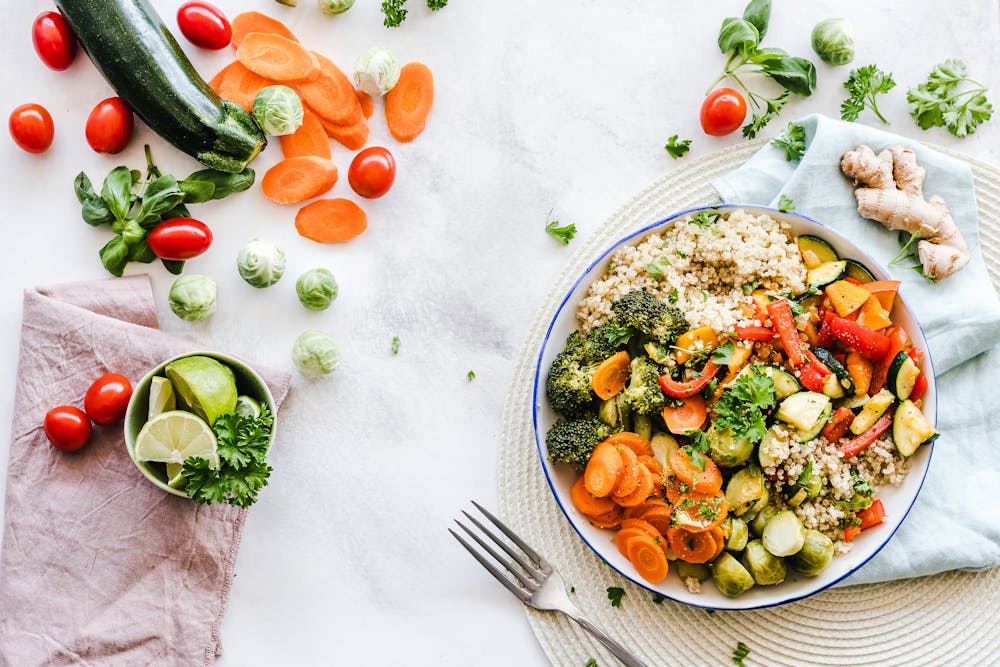
See sources and learn more.
Want to know how we found the information, what studies show, and where uncertainty remains?
The evidence note reviews methods, results, limitations, and sources behind our two guides.
Research and Values
We fight for a world where animals are treated with respect. Research helps us understand the impact of our choices. Our recommendation for veganism is also grounded in valuing animals' interests.