
Octopuses
Intelligent beings reduced to exotic food
Deep beneath the ocean’s surface live creatures with up to ten arms, nine brains, three hearts, and a unique mind. Octopuses are sentient, intelligent individuals who can experience fear, pain, and possibly even joy. Yet they are increasingly caught and farmed to satisfy a global demand for “exotic food.” Read here why we must stop octopus fishing and farming, and how you can best help them.
Imagine an octopus in its natural habitat. It glides gracefully between rock formations, observes with sharp eyes, explores with its many sensitive arms. This creature has never wanted anything but to live, explore, and perhaps hide from danger.
Eating octopuses is unnecessary. It’s not a matter of survival, but desire. And when our desire causes suffering to a being that can feel pain, we must ask ourselves: is it worth it?
Octopuses are remarkably intelligent creatures. They demonstrate advanced behaviors such as problem-solving, social interaction, and an impressive ability to remember past experiences. Research shows they can feel pain and exhibit signs of emotional life. They react to fear, stress, and possibly even joy. We are talking about an animal with far more than instinct—a being that deserves our respect and care. Yet today we treat them as if they feel nothing. This is a fundamental injustice we cannot ignore.
Today, octopuses are caught on a large scale, especially in Asia, the Mediterranean, and Latin America, but fishing also occurs in Denmark and Europe. The industrialization of their capture and a rising number of octopus farms, raise serious ethical issues:
Cruelty: Octopuses are often caught using methods that cause prolonged suffering—including long transport times and painful slaughter.
Environmental impact: Fishing harms the marine environment and negatively affects biodiversity.
Slaughter without anesthesia: Unlike mammals and birds, there are often no legal requirements for anesthesia when killing octopuses.
Captivity: Octopuses do not thrive in small, artificial environments and suffer greatly in them.
Why should we stop octopus fishing and farming?

🧠 Did you know?
Octopuses (belonging to the Cephalopod group) can solve complex problems, open jars, and learn from experience—traits otherwise seen only in higher vertebrates.
Octopuses have a well-developed nervous system and show behaviors indicating they can feel pain and stress.
Their brains are larger relative to body size than many fish and reptiles.
Most octopuses live only 1-2 years but play a vital role in their ecosystems as both prey and predators.
They can swiftly change skin color and texture —both for camouflage and communication.
They have evolved separately from vertebrates for over 500 million years—representing an alternative form of intelligence.
Octopuses, like lobsters are solitary animals by nature, meaning farming them in small tanks crowded with others causes stress, aggression, and high mortality rates.This behavior is similar to what we see in intelligent mammals kept in captivity. It’s no coincidence.
Because of their high intelligence, octopuses suffer even more in captivity than fisk, lobsters, and shrimp,shrimp,
who already suffer greatly. Because octopuses have the capacity to understand, remember, and emotionally respond to their surroundings, the lack of stimulation and freedom isn't just boredom—it’s torture. Their intelligence doesn't make themmore suited for captivity
—it makes them more vulnerable.

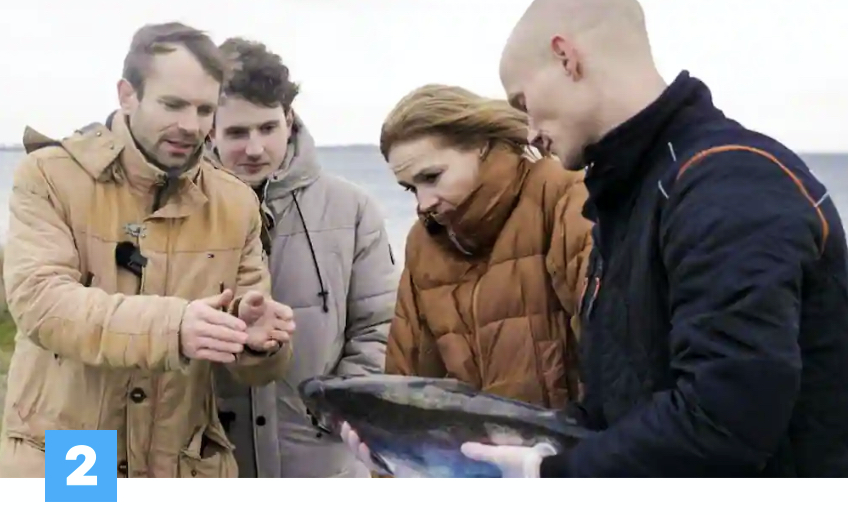
Watch the episode here
How do we solve the problem? One of the arguments Plantespringetfor opening new octopus farms is that it would ease pressure on wild populations. More farmed octopuses would mean more octopuses left in the wild, as people would eat farmed ones instead. But here at Dyrenes Alliance, we don’t see this as a valid argument. We can create a world where we don’t have to interfere in octopuses’ lives for our gain. Besides, more farms simply mean more systematic suffering, not less.
The most compassionate and effective way to protect octopuses—and all sea creatures—is simply to stop eating them. Choosing to remove animals from our plates sends a clear message to the industry: support for suffering and killing has ended.
Switching to a plant-based diet is not just an ethical choice; it’s practical and sustainable. Today, delicious, nutritious, and 100% animal-friendly alternatives to fisk and shellfish are available in most supermarkets. Products that taste like seafood but without anyone suffering for them. By choosing plant-based, we take responsibility and give octopuses and other sea creatures space to live in peace.
So why not try our veganerUdfordring?
You can help us help the octopuses
vegan ethics insists that all sentient beings have intrinsic value. Octopuses’ lives are no less valuable just because they live beneath the sea. Their suffering is sadly not an isolated example of animals suffering for humans. It’s time we expand our empathy—and let sea creatures live in peace.
But it’s not about perfection. It’s about taking a stand. When we choose what to eat, we choose what to support. You can also support our work at Dyrenes Alliance in several ways: Plantespringet Become a member