

Fish
What Everyone Should Know About Fishing and Aquaculture
Why We Need to Talk About Fish
Billions of fish and other sea creatures are killed every year for food. Research shows that fish can feel pain and stress. They suffer when caught and killed without effective anesthesia.
Fishing depletes fish populations and damages marine habitats. Bottom trawling harms sea floor life, and fishing gear often catches unintended animals.
Fish Have Feelings
Studies on rainbow trout reveal pain receptors and behavioral changes after harmful exposure. Research on gilthead seabream shows signs of emotional-like states. In a surgeonfish species, physical touch has been shown to reduce stress.
Sources: Sneddon et al. (2003), Sneddon (2015), Cerqueira et al. (2017) and Soares et al. (2011).
A Horrible Death
Fish endure prolonged suffering when killed without effective anesthesia, such as suffocation out of water or bleeding out. How quickly they lose consciousness depends on species and method.
Rapidly hauling certain fish from deep water causes pressure injuries like swollen swim bladders, bulging eyes, and stomachs pushed through the mouth. Releasing fish doesn’t guarantee survival. Death risk varies by species, hook placement, water temperature, depth, and handling.
Sources: WOAH on anesthesia and humane killing of farmed fish, NOAA on barotrauma (pressure injuries) and Bartholomew and Bohnsack (2005).
More Fish in the Sea?
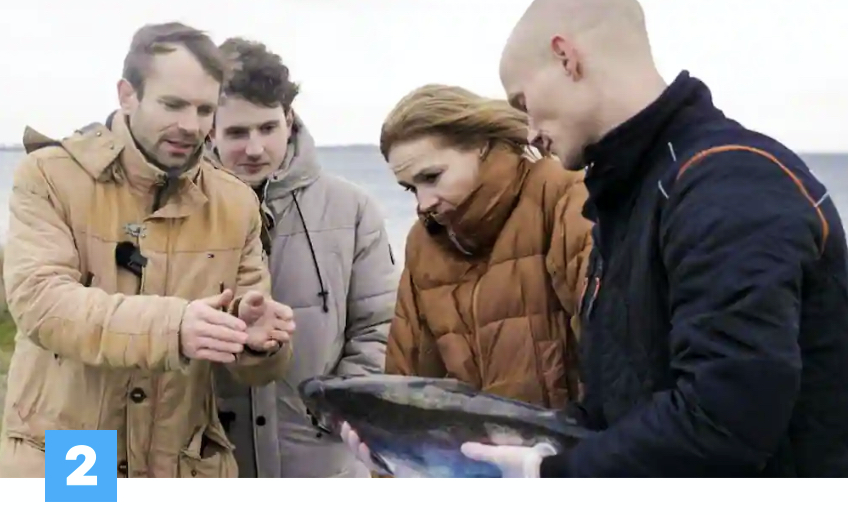
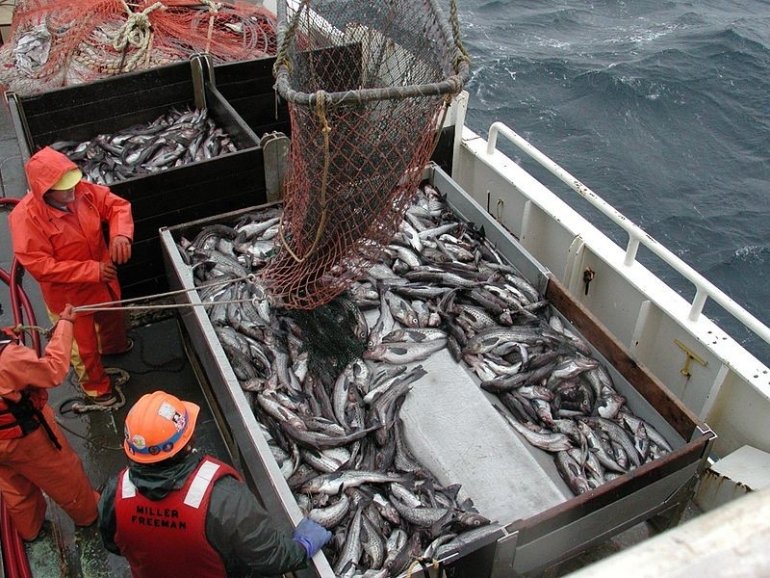
Fishing depletes fish stocks and damages habitats. Bottom trawling disrupts seafloor life, and fishing gear catches unintended animals. Whales, dolphins, porpoises, seals, seabirds, and turtles can become bycatch.
Longline fishing uses lines stretching for miles with thousands of hooks attached.
Sources: Hiddink et al. (2017), NOAA on longlines and bycatch, FAO on fishing gear and Read et al. (2006).
Factory Farming
Farmed fish endure very different conditions. In sea cages, fish are confined in open nets. Production releases nutrients and sometimes copper and drug residues. Feed for salmon, for example, often contains fish meal and fish oil made from wild fish.
Both stunning blows to the head and electric anesthesia can render fish unconscious if done correctly. Mistakes mean fish may remain conscious during killing.
Sources: Environmental Protection Agency on marine farming, Study on wild fish and nutrient runoff from salmon farms (2024) and WOAH on anesthesia and humane killing.
Recreational Fishing Is Not a Harmless Hobby
Recreational fishing is often portrayed as a peaceful pastime, but catching and handling fish causes pain and stress. Hook placement matters and can injure fish.
Releasing fish does not ensure survival. Mortality risk depends on species, hook location, water temperature, capture depth, and handling.
Sources: Sneddon (2015) and Bartholomew and Bohnsack (2005).
Fish are sentient individuals with the right to live free from unnecessary pain and death, including in human entertainment.
Crustaceans
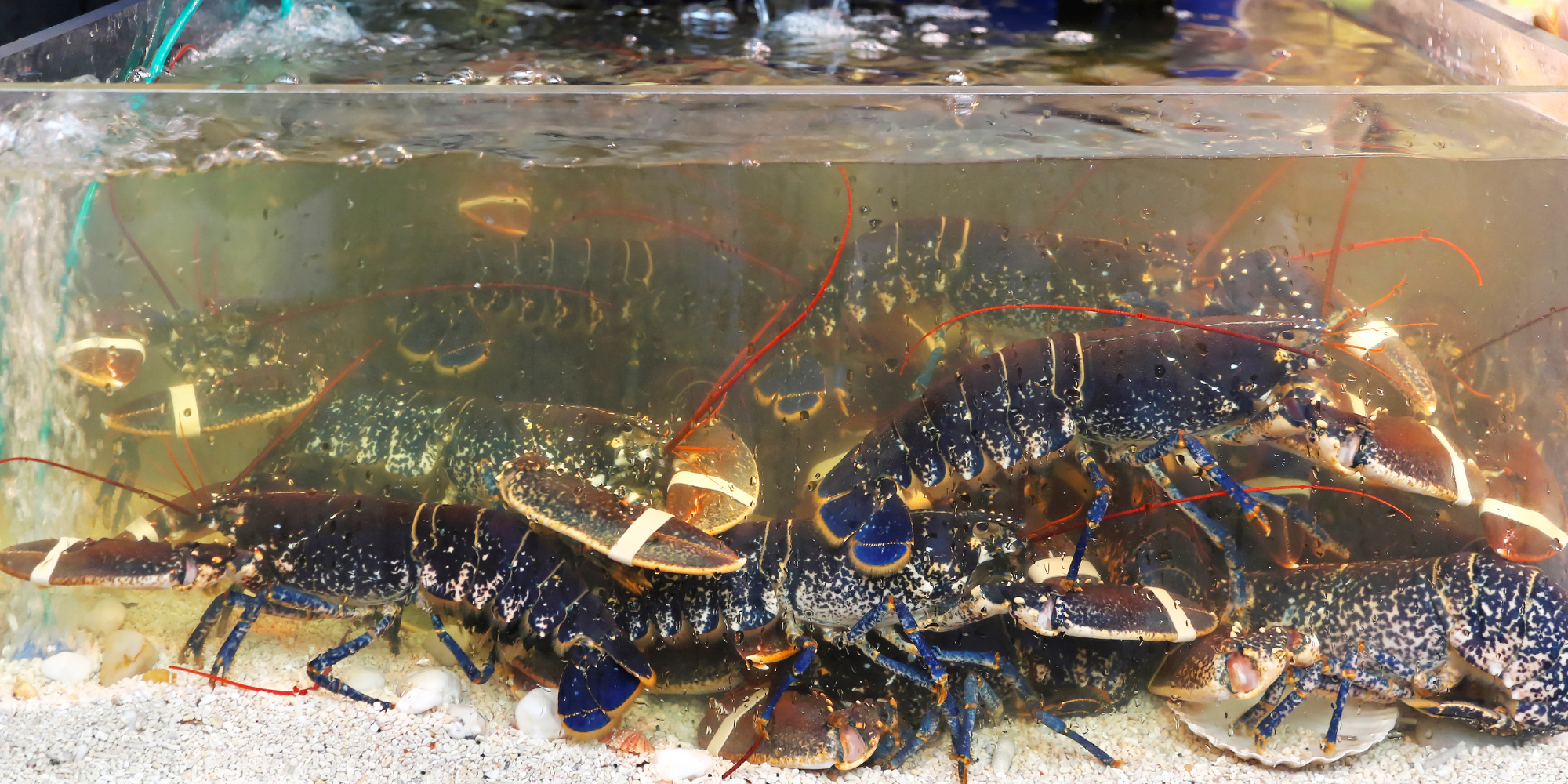
Research confirms ten-legged crustaceans like lobsters and crabs are sentient. Boiling them alive raises serious animal rights concerns.
Source: UK government review on crustacean sentience (2021).
Dangerous Fish?
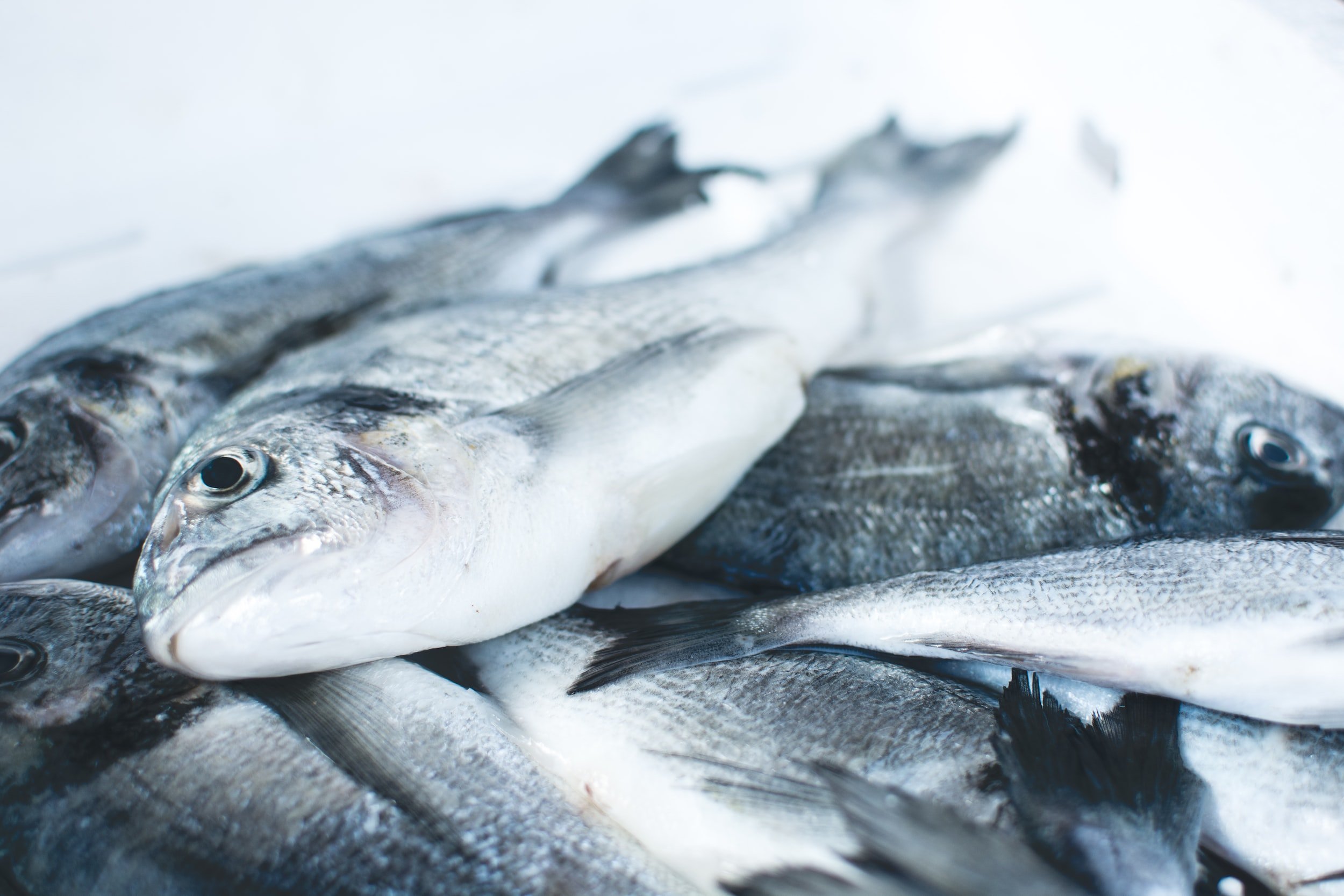
Some fish contain environmental toxins like mercury. Levels vary, with large wild predators carrying the highest. The Food Administration issues special warnings for children and pregnant women.
You can get omega-3 without eating fish. Walnuts, chia, and flaxseeds supply ALA. Algal oil provides DHA and sometimes EPA. The body converts only a limited amount of ALA into EPA and DHA.
Sources: Food Administration on mercury, Food Administration’s fish and tuna guidance and NIH on omega-3.
What You Can Do
It’s simple—you can drop fish and seafood from your diet. Doing so saves countless lives and cuts profits for a global industry that harms millions of sentient beings daily and destroys our environment.
While you're at it, why not try a plant-based diet and fully reject cruelty? Sign up for our 22-day vegan challenge at VeganerUdfordringen.dk.
Facts About Fish
FAO’s 2025 global report found 35.5% of assessed marine fish stocks are overfished. Source: FAO (2025).
A 2024 study estimates 1.1 to 2.2 trillion wild fish were caught annually between 2000 and 2019. Source: Mood and Brooke (2024).
Many fish species produce sounds using muscles, swim bladders, or movement of hard parts. These sounds are used for communication. Source: Rice et al. (2022).
Whales, dolphins, porpoises, seals, seabirds, and turtles become bycatch in fishing gear. Source: Read et al. (2006) and NOAA.