Danish Speciesism: Understanding the mindset underpinning Denmark’s animal-based food industry
Blog post by: Asmund Havsteen-Mikkelsen, MA & MFA Visual Artist.
This blog post reflects the author’s personal views.

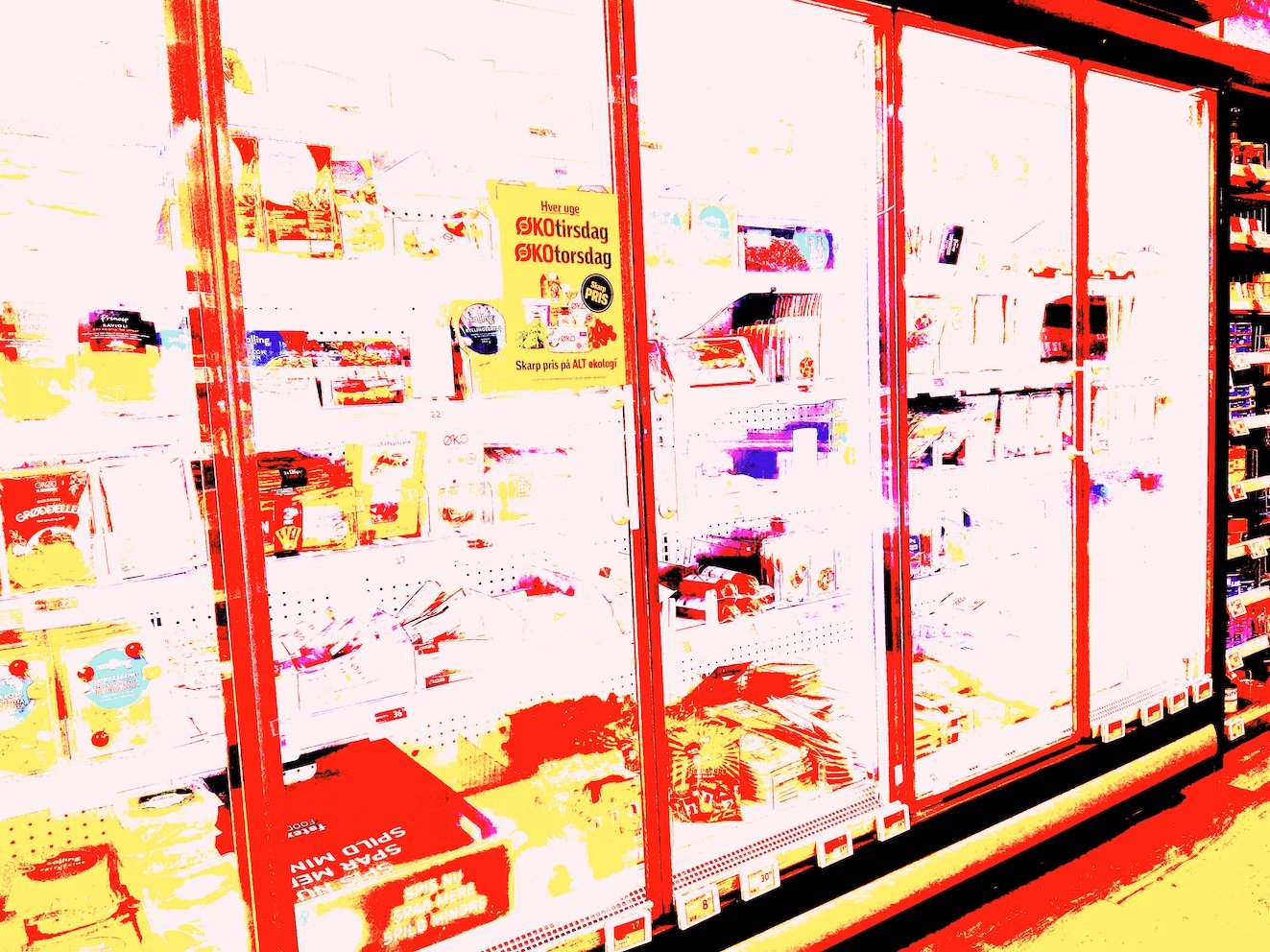
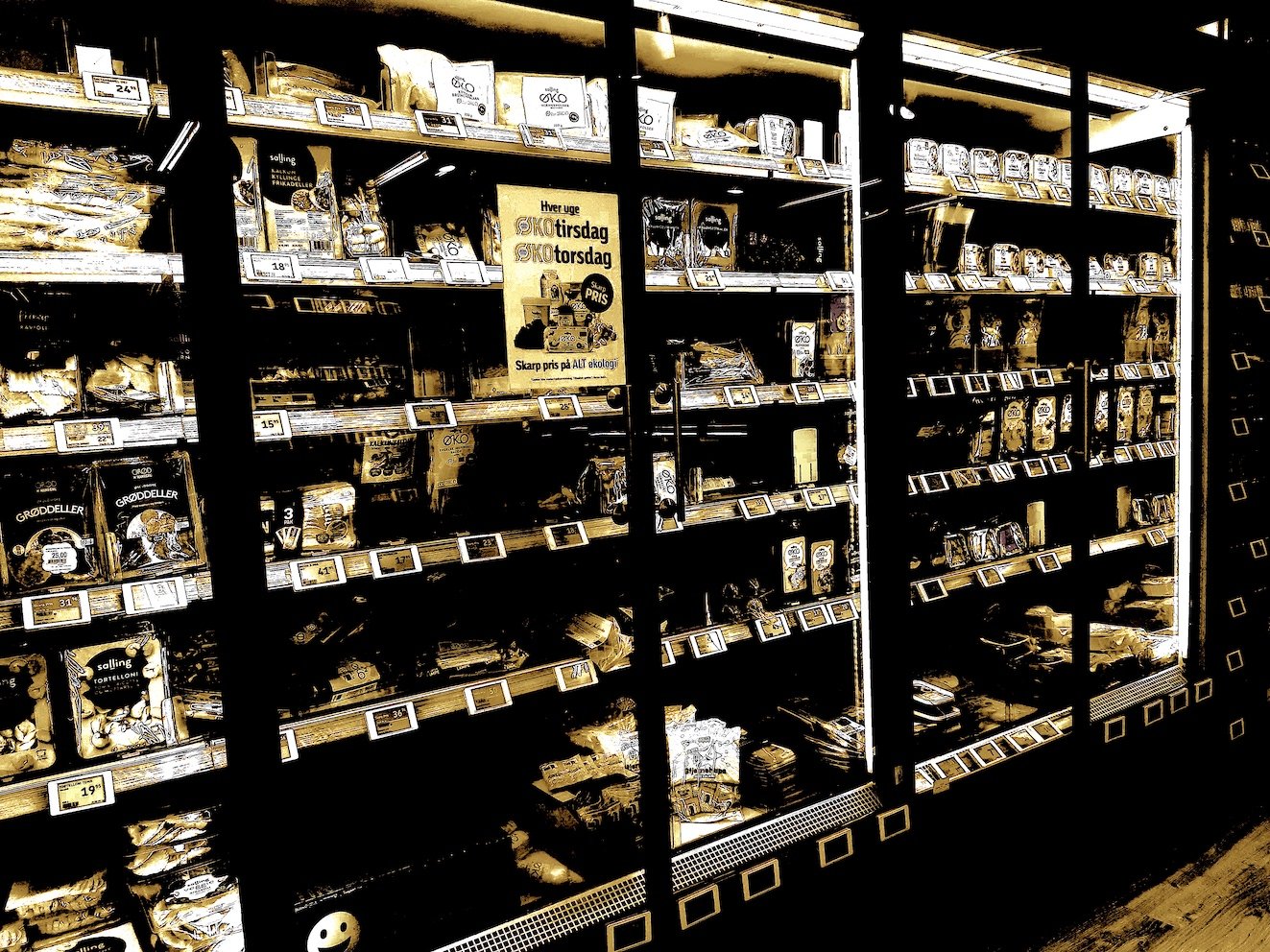
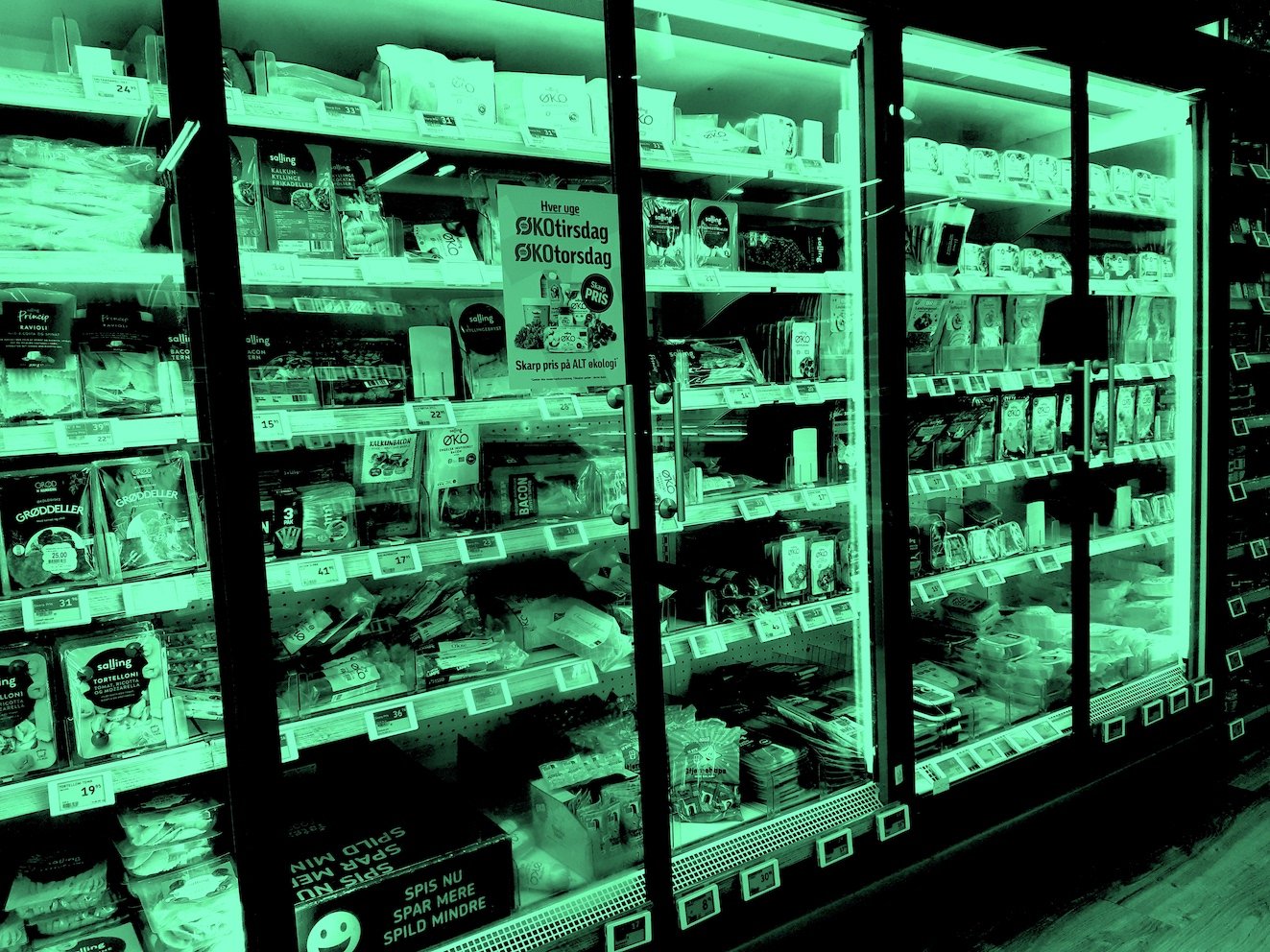
Anyone searching for plant-based food in a supermarket must first pass aisles packed with dead animals or animal-derived products in every form: skinned bodies, severed limbs, pureed organs, butchered and ground muscle, filled intestines, animal cells that could become birds, and nutrient secretions in liquid and solid forms. And there, among the trays of liver pâté and salami slices, appears a vegan pâté. It feels strange reaching into the refrigerated case, so close to body parts that once belonged to living beings—with personalities and the capacity to enjoy life. It’s a mix of horror at the life and death they endured, combined with solidarity, empathy, and the sense of injustice.
Since switching to a vegan diet over four years ago, it has hurt to see pieces of dead animals in stores. After learning about their rearing and deaths, I’ve been shocked by the apparent indifference Danes have toward the social order that allows this vast industrial slaughter of farmed animals. Animals or animal products on the menu are taken for granted in Denmark. Admittedly, before my own diet change, I ate meat and knew how it was produced—but I worried about other societal issues.
In my effort to get to the root of the mindset driving this insane food system, I wrote a book: Danish Speciesism. Danish Speciesism.
Speciesism – Discrimination Based on Species
Speciesism is a concept in animal ethics introduced by Australian philosopher Peter Singer in his 1975 book Animal Liberation. It includes an entire chapter on the historical origin and present-day spread of speciesism.
Singer argues that speciesism should be understood like racism and sexism: structural hierarchies where one party dismisses the interests of another, based on race or gender. In speciesism, one species—in this case humans—overrides the interests of other species to live lives aligned with their evolutionary needs and temporal possibilities. Industrially farmed animals like cows, pigs, and chickens are confined, separated from their offspring, eggs, or milk, deprived of partner choice, and slaughtered far before their natural lifespan. This is not in the animals’ interest. Farming serves human interests—extracting specific animal products. Speciesism is evident in how we rank animals—our pets receive privileges and access to homes, while cows, pigs, and chickens are seen as inferior utility animals, even though pigs are smarter than many dogs and cats.
Speciesism is the mindset justifying this mistreatment of farm animals and dismissal of their fundamental interests. From what position can we challenge speciesism? To me, it must be on moral grounds questioning the legitimacy of treating sentient beings as industrial agriculture does. It fundamentally means recognizing and respecting another living being as an individual with a body in its own right—be it cow, pig, or chicken. These beings did not choose to be farmed nor threaten us. They are innocent victims of human speciesism, just as enslaved people or women have been victims of other oppressive power dynamics.
What is speciesism?
Discrimination based on species. For example, why do we love dogs but eat pigs?
A concept in ethics and philosophy introduced by philosopher Peter Singer.
Many philosophers argue speciesism is morally wrong. We should recognize all species—not just humans.
Speciesism underlies how we treat animals today: it explains why we subject some species to suffering, pain, and death just to eat their bodies.
But where does this idea come from—that humans have the right to dominate, manipulate, and kill non-human species such as cows, pigs, and chickens?
Peter Singer traces speciesism’s Western origins to the Christian creation story, where God creates the world and grants humans divine right to rule over and eat animals. Christianity presents humans as a special species chosen by God to rule over all others. Speciesism thus has mythological roots, deeply woven into our self-understandings as the pinnacle of creation.
Speciesism is no recent invention, and it’s important to note that cultures beyond Christianity also have forms of speciesism.
But in Denmark, speciesism has been pushed to extremes: millions of animals die annually in Danish slaughterhouses. From the animals’ perspective, Denmark is a nation of death and destruction. How can so many accept this as normal? I believe more is at play than just industry lobbying by Landbrug & Fødevarer or beliefs that meat is healthy or essential for flavor and texture. The concept “Danish speciesism” makes sense as a particular variant because agriculture has held a special status since the welfare state’s inception.
Denmark was an agricultural country, with exports laying the economic foundation for the welfare state. From the start, it was part of our identity to raise and kill animals. This was legitimized through our Christian cultural values and brought economic benefit. Profit incentives, as known, lead people to justify many wrongs. Over time, cultural eating habits developed around national dishes like meatballs with brown sauce and potatoes, or roast pork and duck at Christmas.
Today, our agriculture is debt-ridden, plays a minor economic role, causes oxygen depletion in our marine waters, pollutes our drinking water—and worst of all: mistreats and kills animals, making it all painfully hard to face.
But speciesism is written into the Danish Animal Welfare Act, so it must be right? At least it's still legal. Or is it?
Normal does not mean right.
Once, people believed races differed, justifying enslaving people of African descent. Today, we reject that (though racism still exists). Similarly, many accept confining and killing animals at will as legitimate.
My book challenges this belief by exposing speciesism’s consequences for animals and why we must abolish animal-based food production. Being speciesist is a huge privilege—giving quick, easy access to flavors, protein, and fats. And yes, as a species, we have the power to do it. But having power doesn’t mean having the right. Once, parents were allowed to hit their children—power was mistaken for right. Corporal punishment was only banned in 1997. Our moral norms change.
I believe and hope society will one day adopt new moral standards recognizing farm animals as worthy of respect as sentient, feeling individuals. From that standpoint, buying meat or animal products means violence, manipulation, and premature death of beings who would always prefer to live and fulfill their evolutionary needs.
My book on Danish speciesism concludes with two chapters on the moral transformation needed to create a society that abolishes animal farming and what wild nature we could restore if we stopped intensive agriculture to feed farmed animals. Ultimately, it is a manifesto for a new Denmark, analyzing speciesism and its horrible consequences for farmed animals.
Read more
The book "Danish Speciesism" is available for purchase hereIt’s written in English, as it follows a series of books I’ve authored in that language.
In the Danish book The Generous Community—The Dream of a Rewilded Denmark, I also argue for a shift to a vegan diet and transforming our farmland into wild nature, based on a new utopian concept of community. It is available for purchase here.
About the author
This post is by Asmund Havsteen-Mikkelsen, MA & MFA Visual Artist, in connection with the release of his book “Danish Speciesism”.
Current
Asmund Havsteen-Mikkelsen is currently presenting the exhibition NEW DENMARK. The exhibition challenges Danes to reconsider their self-image and views of the country with questions about whether Denmark is a green leader or a nation plagued by environmental problems. Through maps and flags, he challenges perceptions of Danish nature and environment, portraying a contrast between utopian and industrially affected Denmark.
The exhibition is free to visit until January 31.